PSiRA Grades South Africa | E to A Complete Guide 2026


 July 18, 2026 3:10 pm
Many people enter South Africa’s private security industry without fully understanding how PSiRA grades affect their career opportunities. During my research into PSiRA registration requirements and industry guidelines, I found that each grade determines the type of security duties a person is legally qualified to perform. This guide explains the different PSiRA grades, training levels, job roles, and progression path using accurate, up-to-date information to help you make informed career decisions.
What are PSiRA Grades?
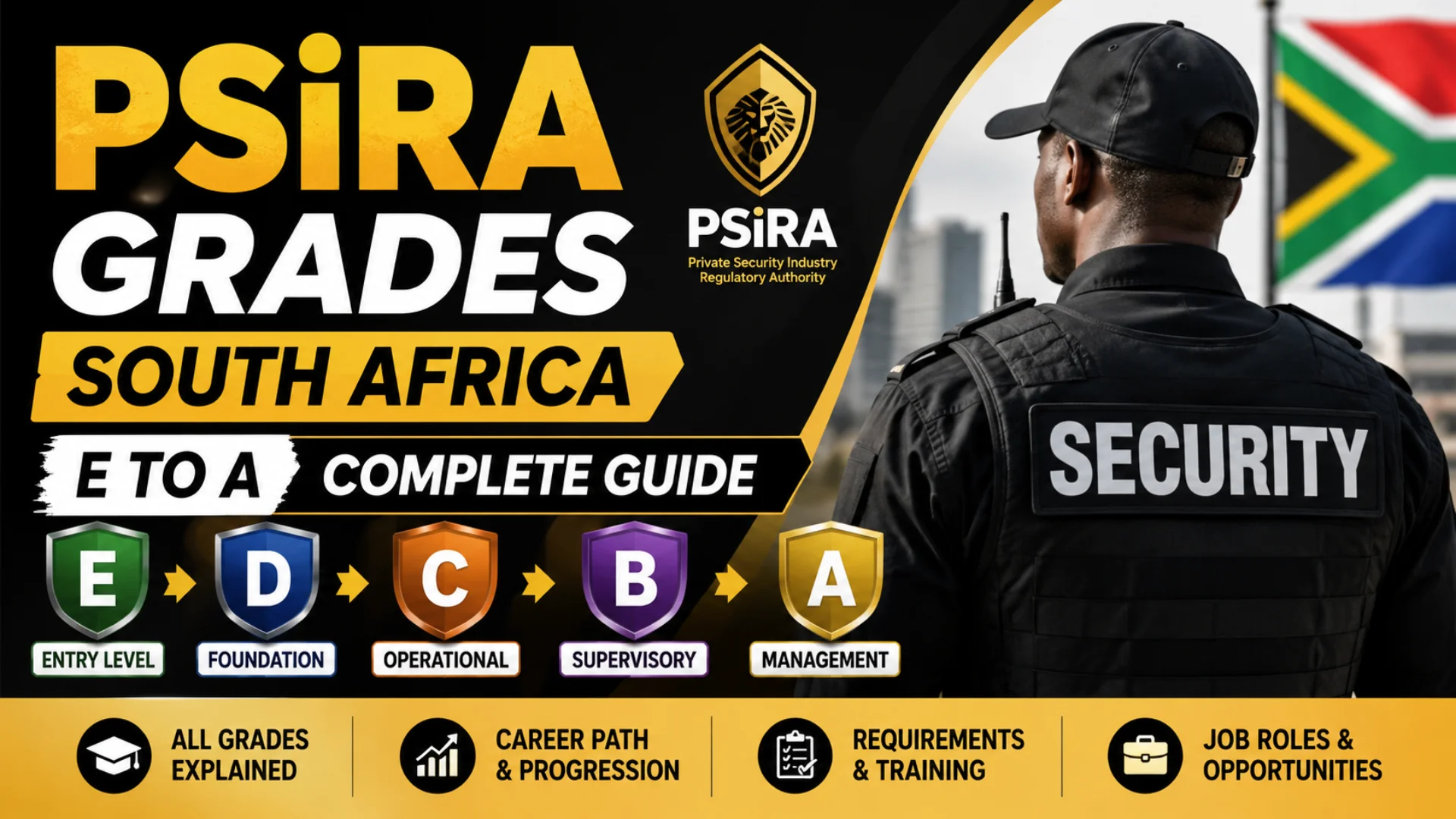
In South Africa, the Private Security Industry Regulatory Authority (PSiRA) classifies security officers into five grades, ranging from Grade E (entry level) to Grade A (senior management). These qualifications are usually completed in sequence through an accredited training centre, allowing security professionals to develop their skills, meet industry standards, and progress to higher-level roles.
Overview of All PSiRA Grades
PSiRA Grade E
Grade E PSiRA training is the entry-level qualification for individuals who want to begin a career in South Africa’s private security industry. It provides the essential knowledge and practical skills needed to work as a security guard or watchman, even if the learner has no previous security experience.
The course focuses on building a strong foundation in security operations, legal responsibilities, and workplace professionalism. During the training, learners are introduced to:
- Basic security principles and industry regulations
- Access control procedures
- Patrolling techniques
- Effective communication skills
- Customer service and public interaction
After successfully completing Grade E training, candidates are equipped to carry out basic security duties, identify and report potential security risks, and perform their responsibilities in accordance with PSiRA standards.
PSiRA Grade D
A PSiRA Grade D qualification is a compulsory intermediate-level security training course in South Africa. It follows the entry-level Grade E certification and equips security officers with the skills to perform access control, monitor entry and exit points, manage visitor registers, and maintain site security using established physical security procedures.
PSiRA Grade C
Grade C PSiRA training equips individuals with the practical knowledge and skills needed to carry out routine security duties effectively. It is intended for security officers who perform operational tasks but do not hold supervisory or managerial responsibilities.
The training typically covers:
- Basic security procedures and responsibilities
- Access control and visitor management
- Patrolling techniques
- Search procedures
- Emergency response and incident handling
Participants also learn how to identify and report security risks, monitor security systems, respond appropriately to incidents, and deliver professional customer service while carrying out their duties.
PSiRA Grade B
Grade B PSiRA security training prepares individuals for supervisory roles within South Africa’s private security industry. It equips learners with the practical knowledge and leadership skills needed to oversee security personnel, maintain safety standards, and protect people, property, and assets.
The training covers key areas such as security risk assessment, access control procedures, patrol management, communication techniques, emergency response, incident handling, and basic investigations. Participants also learn how to coordinate security operations, supervise teams effectively, resolve workplace issues, and deliver professional customer service while ensuring compliance with industry regulations.
PSiRA Grade A
PSiRA Grade A is the highest security qualification in South Africa and is intended for senior supervisors, managers, and company directors. It prepares you to manage security operations, supervise personnel, conduct investigations, and oversee evidence handling. To qualify for Grade A training, you must first complete and hold valid certifications for PSiRA Grades E, D, C, and B.
How to Progress from Grade E to Grade A
Advancing from PSiRA Grade E to Grade A is a step-by-step process. Each grade builds on the knowledge and skills gained in the previous one, so you cannot skip directly to a higher grade.
Step 1: Start with Grade E
- Complete accredited Grade E training.
- Register with PSiRA after meeting all eligibility requirements.
- Gain basic experience as an entry-level security officer.
Step 2: Upgrade to Grade D
- Enroll in Grade D training at a PSiRA-accredited training center.
- Learn access control, patrol duties, and incident reporting.
- Work in positions with greater responsibility.
Step 3: Complete Grade C
- Obtain the Grade C qualification.
- Develop skills in supervising small teams, handling emergencies, and managing daily security operations.
- Gain practical workplace experience.
Step 4: Earn Grade B
- Complete Grade B training after obtaining Grade C.
- Learn advanced supervision, staff management, site inspections, and operational planning.
- Take on supervisory or team leader roles.
Step 5: Achieve Grade A
- After successfully completing grades E, D, C, and B, enroll for grade A.
- Study management, investigations, risk assessment, evidence handling, and leadership.
- Qualify for senior positions such as security manager, operations manager, director, or senior supervisor.
PSiRA Grades Prices
Training fees for PSiRA security grades typically range from R950 to R1,500 per individual grade, while bundled training packages such as Grades E, D, and C usually cost between R2,100 and R2,500. In addition to training costs, applicants must pay a once-off PSiRA registration fee, which generally ranges from R290 to R610, depending on the type of registration and applicable fees.
PSiRA Grades Check Online 2026
Visit our homepage, use the PSiRA Grades Check tool, and check your PSiRA grade in just a few clicks.
PSiRA Grades Comparison
| PSiRA Grade | Level | Typical Job Role | Main Responsibilities | Career Stage |
|---|---|---|---|---|
| Grade E | Entry Level | Security Guard, Patrol Guard | Basic guarding, access control, patrols, observation, and reporting incidents. | Starting a security career |
| Grade D | Basic Operational | Gate Guard, Retail Security Officer | Access and egress control, visitor management, emergency procedures, and routine site security. | Junior security officer |
| Grade C | Intermediate | Site Supervisor, Senior Guard | Supervising Grade D & E officers, incident reporting, shift coordination, and client communication. | First-line supervisor |
| Grade B | Advanced Supervisory | Security Supervisor, Shift Commander | Managing multiple teams, conducting risk assessments, ensuring legal compliance, and operational planning. | Senior supervisor |
| Grade A | Management | Security Manager, Operations Manager, Director | Managing security operations, staff leadership, investigations, policy implementation, and strategic planning. | Highest management level |
Common Mistakes When Choosing a PSiRA Grade
Choosing the wrong PSiRA grade can delay your career progression, increase training costs, and prevent you from qualifying for certain security positions. Before enrolling, make sure you understand what each grade allows you to do and which qualification matches your career goals.
1. Skipping Lower Grades
Many people believe they can enroll directly in Grade A or Grade B. However, PSiRA grades must generally be completed in sequence, starting from Grade E and progressing upward.
2. Choosing a Grade Based Only on Salary
Higher grades often lead to better-paying positions, but they also require more responsibility and previous qualifications. Select a grade that matches your experience and career stage.
3. Training at a Non-Accredited Centre
Completing a course at an unaccredited training provider may result in qualifications that are not recognized. Always verify that the training centre is officially accredited before enrolling.
4. Not Understanding Job Requirements
Different security roles require different PSiRA grades. For example, a standard security guard may only need Grade E or D, while supervisors and managers usually require Grade C, B, or A.
5. Ignoring Career Progression
Some applicants choose only the minimum required grade without considering future promotions. Planning your training pathway early can make it easier to move into supervisory or management positions later.
6. Assuming Every Employer Has the Same Requirements
Security companies may have different qualification requirements depending on the industry, client contracts, or job responsibilities. Always confirm the required PSiRA grade before applying.
7. Failing to Verify Existing Qualifications
Before registering for another course, check that your previous PSiRA grades are correctly recorded. This helps avoid duplicate training and unnecessary expenses.
8. Overlooking Renewal and Compliance
Earning a PSiRA grade is only part of the process. You must also keep your registration active and comply with PSiRA requirements to remain eligible for employment in South Africa.
Frequently Asked Questions About PSiRA Grades
Conclusion
Understanding PSiRA grades helps you choose the right training, qualify for suitable security roles, and plan long-term career growth in South Africa’s private security industry. By completing each grade in sequence, training through an accredited provider, and maintaining active PSiRA registration, you can improve your employment opportunities and professional advancement.