How Long Does PSIRA Approval Take?


 September 4, 2026 4:16 am
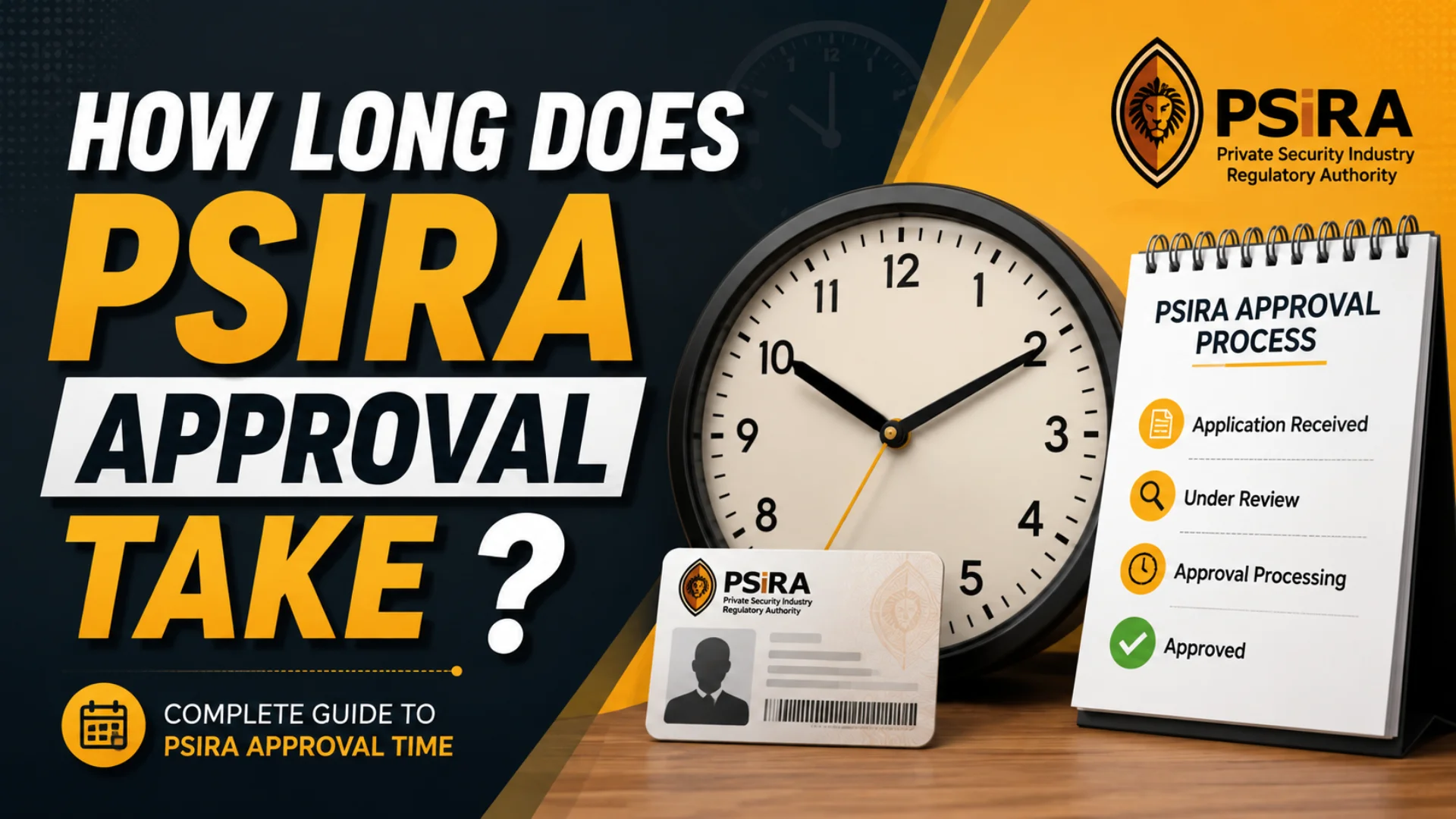
If you’re planning to work in South Africa’s private security industry, one question comes up again and again: how long does it actually take to get approved by PSIRA? Whether you’re an individual applying for your first security officer registration, a training provider seeking accreditation, or a business owner trying to line up staff for a new contract, the honest answer is: it depends. But there are clear patterns, and knowing them can save you weeks of frustration.
This guide breaks down realistic PSIRA approval timelines, what causes delays, and practical steps you can take to keep your application moving.
What Is PSIRA and Why Approval Timing Matters
The Private Security Industry Regulatory Authority (PSIRA) is the statutory body responsible for regulating South Africa’s private security sector. No individual or company can legally operate, be employed, or provide services in this industry without valid PSIRA registration. That makes the approval timeline more than just an administrative detail; it directly affects when you can start earning, when a company can deploy staff, and whether a business can honor a signed contract or tender.
Because so much rides on this single approval, understanding the process from start to finish is essential for anyone entering the field, whether as a guard, instructor, or training provider.
Typical PSIRA Approval Timelines
There’s no single fixed number of days PSIRA promises for every application, since processing speed depends heavily on the applicant’s category and how clean the submission is. That said, a few general benchmarks apply across most cases.
- Best case scenario: Around four weeks. This applies when your paperwork is complete, your identity details match perfectly across all documents, and background and fingerprint checks come back without complications.
- Average case scenario: Most standard individual security officer registrations take somewhere between six and eight weeks from submission to final approval. This is the range most applicants should plan around when budgeting time before a job start date.
- Worst case scenario: In some cases, approval can stretch to three to six months. This usually happens when there are unresolved documentation queries, delays from training centers in uploading course results, or backlogs in the criminal record and fingerprint verification process handled through SAPS.
For specific categories, the timelines shift again. Instructor applications tend to move faster, often wrapping up in around seven days, since the scope of verification is narrower. Training Provider (TP) accreditation, on the other hand, is a more involved process and generally takes about 30 days, given the additional checks on facilities, curriculum, and compliance standards.
Why Applications Get Delayed
Understanding what slows an application down is often more useful than knowing the average timeline, because it puts control back in your hands.
Mismatched personal information
One of the most common and most avoidable causes of delay is a mismatch between the details on your application and your official identity documents. Something as small as a misspelled surname or an incorrect ID number can halt the review entirely. Once this happens, the application effectively pauses until the discrepancy is corrected and resubmitted, which can add weeks to the process.
Training center delays
If you’ve completed the required security training, your course grades and completion reports need to be submitted to the PSIRA Digital Portal by your training provider. If the training center is slow to upload this information, your application will sit in limbo regardless of how complete the rest of your file is. This is a frustrating bottleneck because it’s largely outside the applicant’s direct control, which is why choosing a reliable, well-organized training provider matters more than many applicants realize.
Background and fingerprint checks
Criminal record verification through SAPS is a mandatory part of the process, and processing times here can vary depending on volume and administrative backlogs. This step is often the single biggest variable separating a four-week approval from one that drags on for months.
The Real Cost of Delays
For individuals, a delayed approval can mean missing a job start date entirely, especially in an industry where employers often need staff cleared and ready on short notice. For companies bidding on tenders or security contracts, the stakes are even higher. Losing a tender because staff registrations weren’t finalized in time is a costly and entirely preventable setback.
Given this, industry professionals generally recommend applying two to three months before you actually intend to start working or trading. Building in this buffer accounts for the “average case” timeline while still leaving room if something goes wrong along the way.
How to Speed Up Your PSIRA Approval
While you can’t control every variable, there’s a lot you can do to avoid unnecessary delays and keep your application on the fastest possible track.
Submit a complete and accurate application from the start. Before you submit anything, double-check that your pre-registration details on the portal, your personal information, and your fingerprint submission all match your official identity documents exactly. This single step prevents the most common cause of application freezes.
Choose your training provider carefully. Since your course results need to reach the PSIRA portal promptly, ask your training center directly about their track record for submitting grades and reports on time. A provider with a poor submission history can quietly cost you weeks.
Track your application status actively. Don’t submit and forget. Log into the official PSIRA portal regularly to confirm your application shows as “submitted for review” and that your training results have been correctly recorded against your profile. Catching an issue early is far easier to fix than discovering it months later.
Follow up if things stall. If eight weeks pass with no update or change in status, it’s worth reaching out directly. Contacting the registration department or your regional PSIRA branch can help you pinpoint exactly what’s holding up your file, whether it’s a document query, a training upload issue, or a background check still in progress.
Final Thoughts
PSIRA approval timelines aren’t fixed, but they are predictable enough to plan around. For most individual applicants, six to eight weeks is a realistic expectation, with faster turnarounds possible for clean applications and longer waits likely if documentation or background checks hit snags. The best strategy is simple: apply early, get every detail right the first time, work with a training provider you trust, and stay proactive about checking your status rather than waiting passively for an update.
Getting registered isn’t just a formality; it’s the gateway to legally working in South Africa’s private security industry. Treating the timeline with the same seriousness as the paperwork itself is the surest way to avoid missed opportunities down the line.